BlockChat
Decentralized Mobile Messenger App
BlockChat allows users to establish secure, intentional connections via phone numbers, email, or QR codes, enabling conversations only with selected contacts. User conversations are not stored, ensuring strong data ownership and privacy.
I led the end-to-end product experience across connection flows, secure messaging, and privacy focused voice interactions, collaborating closely with the CTO, engineering team, and business marketing teams.
For several months after launch, I worked directly with customer support to translate real user feedback improvements, ensuring that privacy principles remained usable in real world contexts. Blockchat launched successfully with 10K downloads in first month.
Company
Blockchain labs
Services
UI & UX Design
Industries
Tech
Role
UXUI Designer

Problems
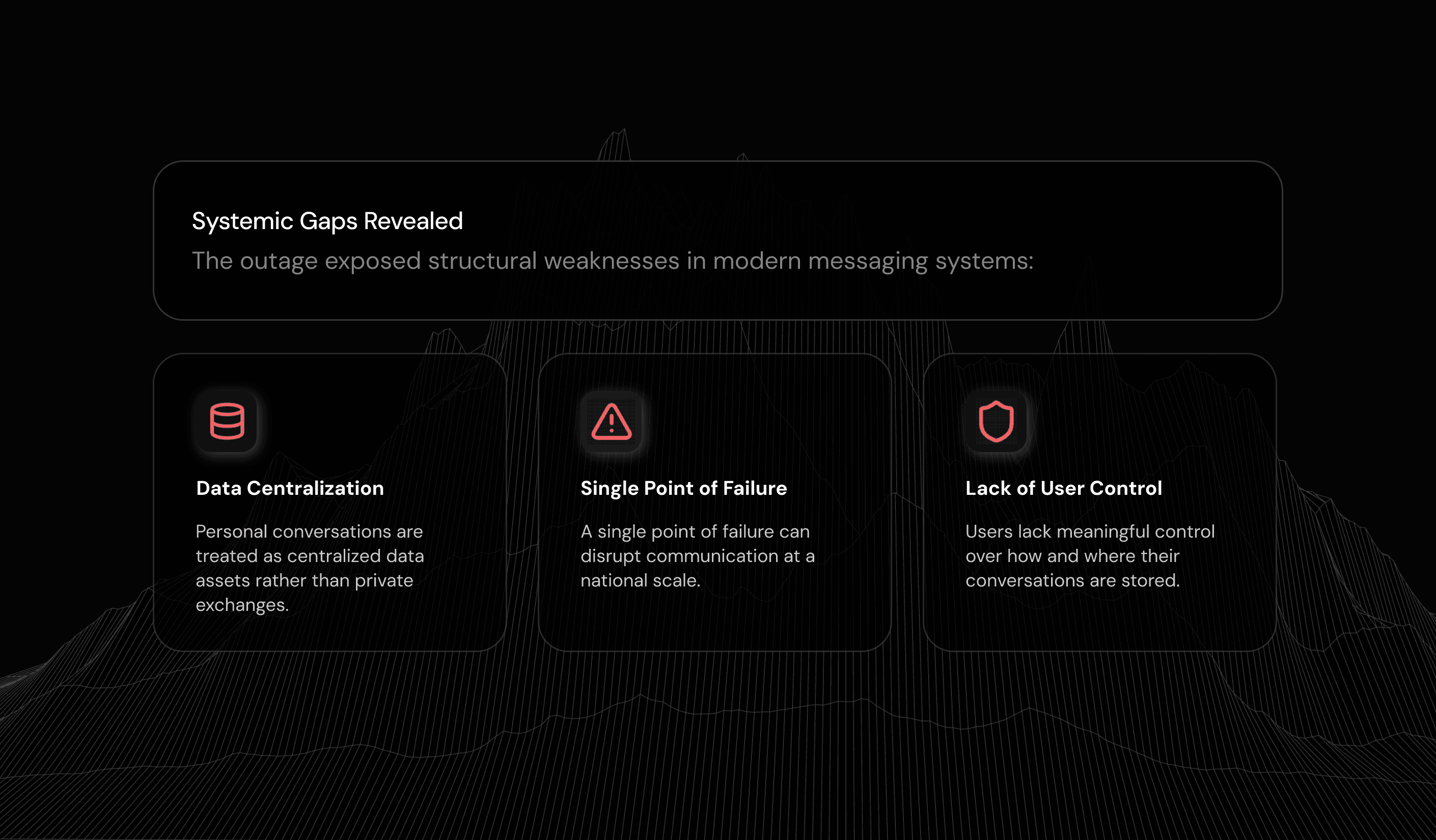
In South Korea, a fire at KakaoTalk’s data center caused a nationwide service outage, making the country’s dominant messaging app inaccessible for millions of users. The event triggered public backlash and raised broader concerns around reliability, privacy, and systemic risk in centralized messaging services. Within days, over 2 million users left KakaoTalk, migrating to alternative platforms such as Telegram and LINE. The outage reframed digital messaging as an infrastructure problem, not just a product issue revealing the need for communication systems that prioritize user control, privacy, and resilience by design.
At the same time, growing concerns about privacy breaches affecting Korean K-pop artists further increased public awareness of digital security risks. Reports surfaced of unauthorized access to celebrities’ personal information, including cases where transportation employees viewed travel records without permission, as well as incidents involving hacked or leaked social media, email, and messaging accounts. These events highlighted the vulnerability of private communications and reinforced the importance of messaging systems designed with strong privacy protections and user control.
Challenge
/* Create a privacy first messaging system that restores user control over identity + data ownership, while delivering a seamless experience comparable to centralized platforms. */
My Role - Lead UX/UI Designer
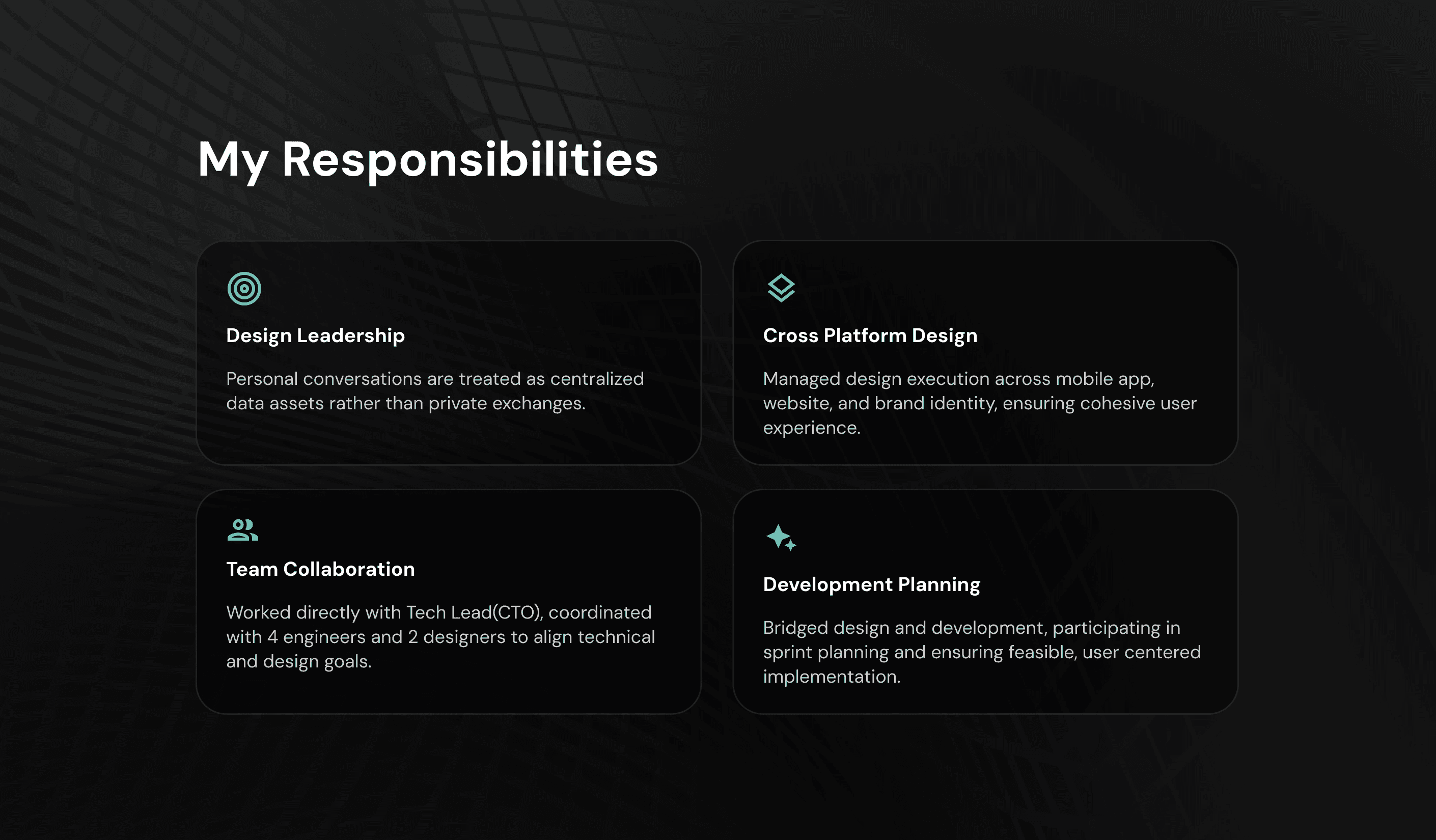
As the Lead UX/UI Designer for the BlockChat mobile app, I designed and launched BlockChat’s features: 'Intentional Connections', 'Secure Messaging' and 'Voice Calling with Privacy Controls' from an idea written on an A4 sheet of paper. As the lead designer working alongside a Tech Lead (CTO), 4 engineers, and 2 designers, I managed both development planning and design across the mobile app, website, and brand.
Product Principles & Constraints
Core product principles and technical constraints that shaped BlockChat’s design decisions, balancing privacy, usability, and system reliability.
User Controlled Connections
The product prioritized explicit user consent over automated behaviors. Features such as automatic contact syncing and inferred social graphs were intentionally excluded. Users define who they connect with and how conversations are managed, increasing transparency and trust.
Privacy by Default
User conversations were designed to remain private by default. Messages were not stored centrally, reducing exposure to data retention risks, legal requests, and infrastructure failures. Design decisions around connection approval, message control, and data handling were aligned with this principle.
Design Within Technical Constraints
The product was designed within constraints related to decentralized identity, blockchain based verification, and security requirements. These constraints informed simplified user flows, limited feature scope, and reduced system complexity.
Clear and Predictable System Behavior
Interfaces were designed to clearly communicate connection states, permissions, and messaging outcomes. This reduced user confusion and minimized the need for onboarding or additional guidance.
Scalability Through Focused Scope
Feature decisions favored a limited set of core use cases over broad feature coverage. This approach supported system stability, maintainability, and long term scalability.
Features
Blockchain DID Creation
I designed this feature with the intention of eliminating unnecessary identity collection from the very first touchpoint.
Instead of relying on centralized log in systems, the product generates a unique Blockchain DID tied to the user’s device. No phone number, email, or personal data is required.
By removing server dependent identity storage, the system minimizes data exposure risk while preserving authentication reliability. *DID: Decentralized Identity
Intentional Connections
Intentional Connections enables users to choose multiple methods of connecting with contacts, rather than relying on automatic phone number based contact imports. In designing the Intentional Connections feature, I defined a floating navigation control for initiating direct and group connections, and a streamlined connection acceptance flow that allows users to interact seamlessly within the app without requiring additional guidance.
User A
Sending Connection Code
User B
Accepting Connection
Interface Level Message Customization
Message Customization empowers users to define each connection according to their own privacy preferences for each contact for in app conversations.
I designed Delete or Edit Messages, Custom Connection Codename, Text Alignment Switching, Customizable Text Colors, and Adjustable Text Size to enhance user authority over their conversations.
These features allow the entire message interface to be visually disguised when needed.
Voice Calling with Privacy Controls
Voice Calling with Privacy Controls allowed users to speak in real time without relying on a centralized server.
I designed an AI Voice Filter that anonymizes vocal signatures in real time, giving users control over how their voice is used and ensuring it can’t be extracted, cloned, or submitted as legal evidence.
Process
From Idea to Direction
Iterating with leadership & engineering
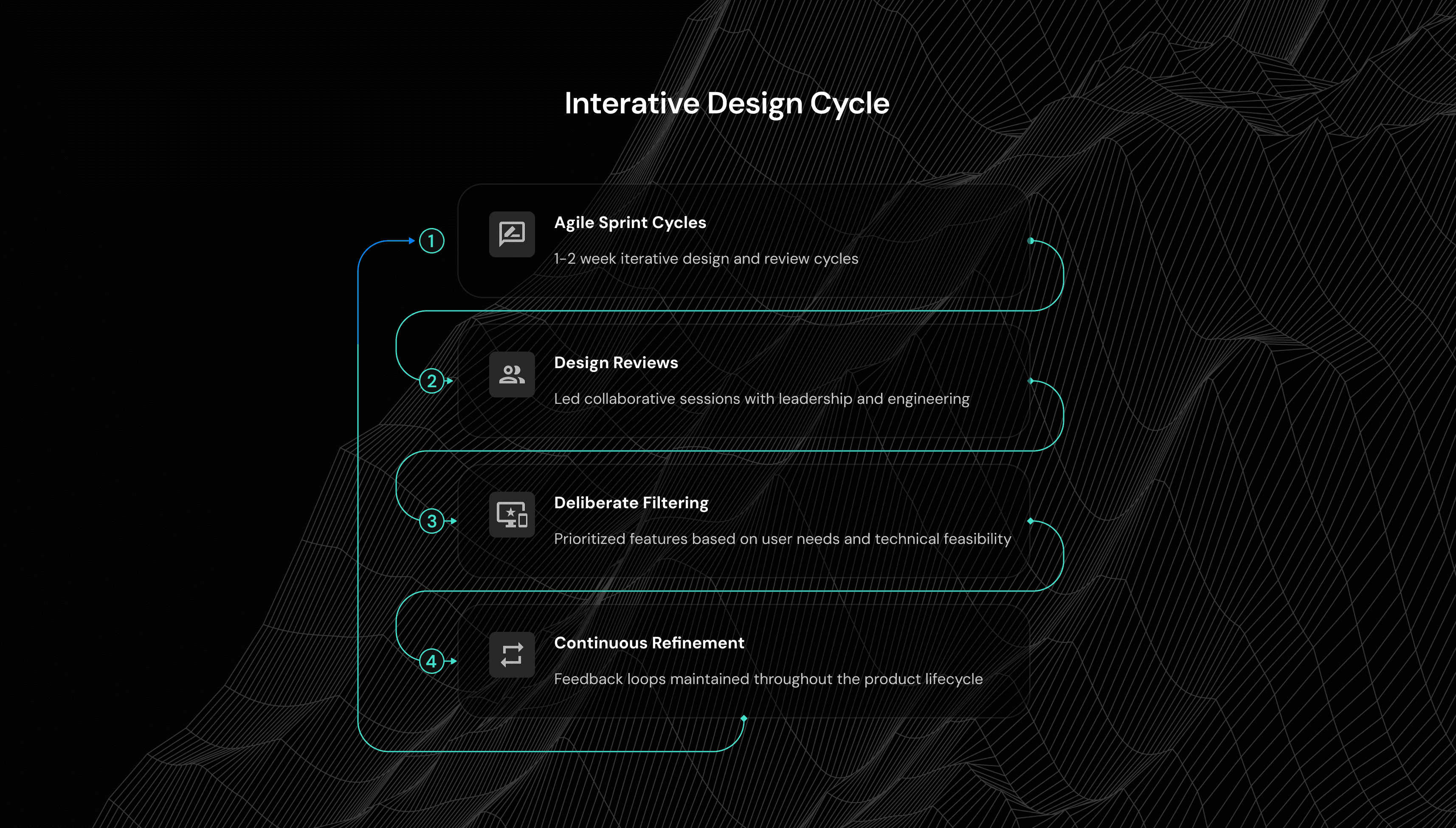
BlockChat was designed through an iterative, agile based process with continuous collaboration across design, engineering, and leadership teams. Every 1–2 weeks, I led design reviews using wireframes and prototypes to evaluate ongoing UX and UI decisions with the leadership team. Necessary and unnecessary ideas were deliberately filtered, refined, and prioritized, and feedback from each session directly informed the next design iteration. This cycle continued before and after development, ensuring alignment throughout the entire product lifecycle.
Building the Foundation
Defining structure before visuals
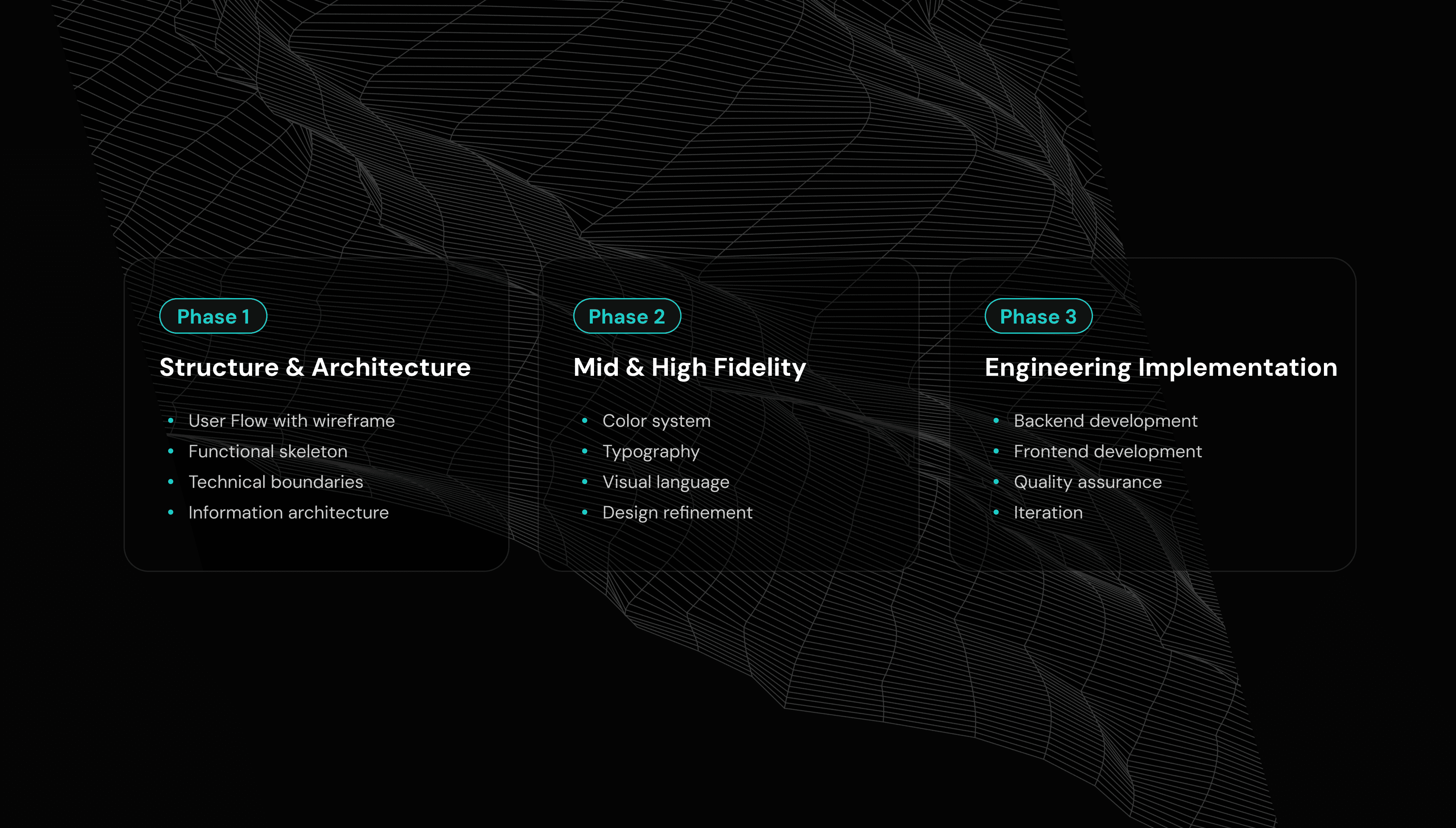
Once the information architecture, core user flows, and technology boundaries were clearly defined, we established a functional design skeleton. Based on this foundation, I led the application of product branding, defining the color system, typography, and visual language, while continuously refining the UX in parallel. Backend engineers began development based on this structural foundation, followed by frontend engineers joining after the brand system and high-fidelity designs were finalized, enabling efficient and high-quality implementation.
Extending Design Beyond the Product
Supporting launch & growth
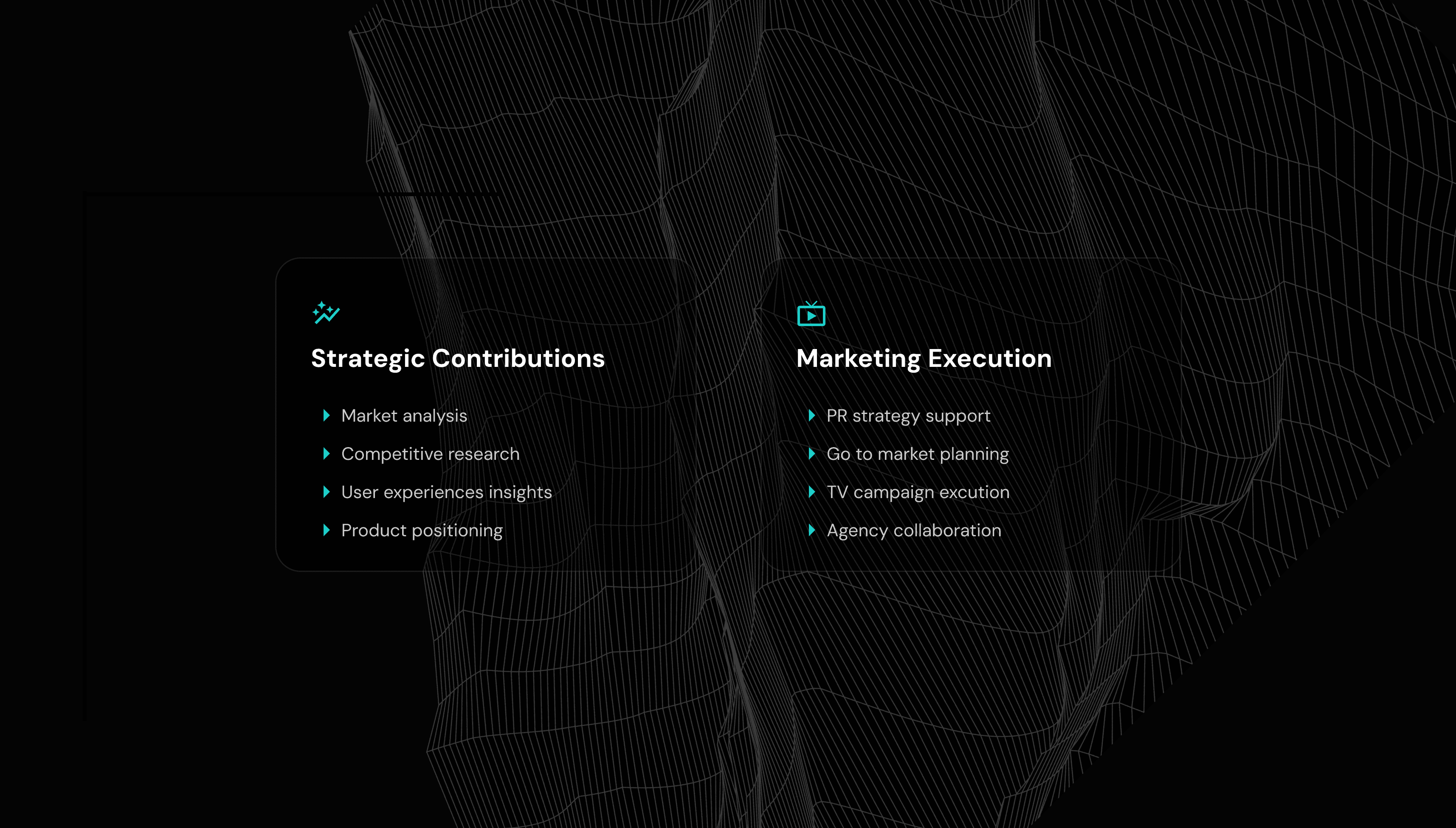
Beyond product design, I collaborated closely with design and business teams to support PR and go to market strategy. I contributed to market analysis, competitive research, and user experience insights, translating deep product knowledge into strategic inputs for marketing. This collaboration extended to executing a nationwide television advertising campaign in partnership with an external agency.
National TV Commercial
In the film, the yellow bear symbolically represents Ryan, KakaoTalk’s mascot, serving as a metaphor for large messaging platforms positioned between users and their conversations. The scene reflects concerns around data centralization, where private messages can be collected or monitored by centralized services.
Key Trade offs & Decisions
Designing BlockChat required balancing privacy, usability, and scalability. Product decisions prioritized long term trust and system reliability over short term convenience.
Automatic Contact Sync VS. Intentional Connections
Automatic address book syncing was considered to reduce onboarding friction. This approach was rejected due to privacy risks and lack of explicit user consent. Instead, users create connections through phone numbers, email, or QR codes. Each connection requires explicit approval, ensuring conversations occur only with selected contacts. This decision increased onboarding effort and required alignment with leadership on growth expectations, but established trust and intentional use before scale.
Message Persistence VS. Data Ephemerality
Rather than replicating feature heavy chat platforms, the product prioritized focused, high control interaction tools. This meant defining clear interaction boundaries including per connection controls and message level authority. Narrowing feature breadth required restraint, but resulted in a system that was easier to reason about and trust.
Feature Breadth VS. Interaction Clarity
Server side message storage was evaluated for synchronization and recovery benefits. This option was rejected because it conflicted with privacy and data ownership principles. The product does not store conversations by default. This reduced centralized data risk and exposure to data retention issues. The trade off introduced limited recovery options, but avoided architectural dependencies that would be difficult to change at scale.
Speed of Adoption VS. Trustworthiness
Some decisions slowed early adoption and increased internal debate across product and business teams. Trust was treated as a non negotiable requirement, with the belief that credibility lost early is rarely recoverable at scale. Also no advertisement in the chat room.
Impact
Reached 23,000+ downloads within the first few 3 months of launch.
Ranked in the Top 10 social apps during early adoption phase.
Achieved a 4.8/5 rating on Google Play, with user describing the app as “trustworthy,” “lightweight,” and “finally private.”
The target users included CEOs, politicians, and diplomats who handle security sensitive conversations, forming a privacy focused community. The platform was also supported by the Korean K-pop entertainment industry, encouraging artists (including those from groups such as BTS and BLACKPINK) to use it to protect their privacy.
Reflection
How It Shaped My UX Philosophy
I learned how to communicate design intent clearly through structured artifacts, including PRDs, design specs, and shared documentation, allowing stakeholders to align early and make informed decisions. Navigating trade offs and aligning UX direction with business goals sharpened my ability to design not just screens, but outcomes.
What I'm Most Proud Of
I was the first and only designer at the beginning, and as the team scaled to include 2 designers and 5 developers, I helped lead the product from inception to launch. I established our design system from scratch, enabling faster collaboration, scalable workflows, and consistent quality across the product. Watching the system I built empower others was just as rewarding as shipping the product itself.